
The Ways We Knit. A Guide to All Knitting Styles
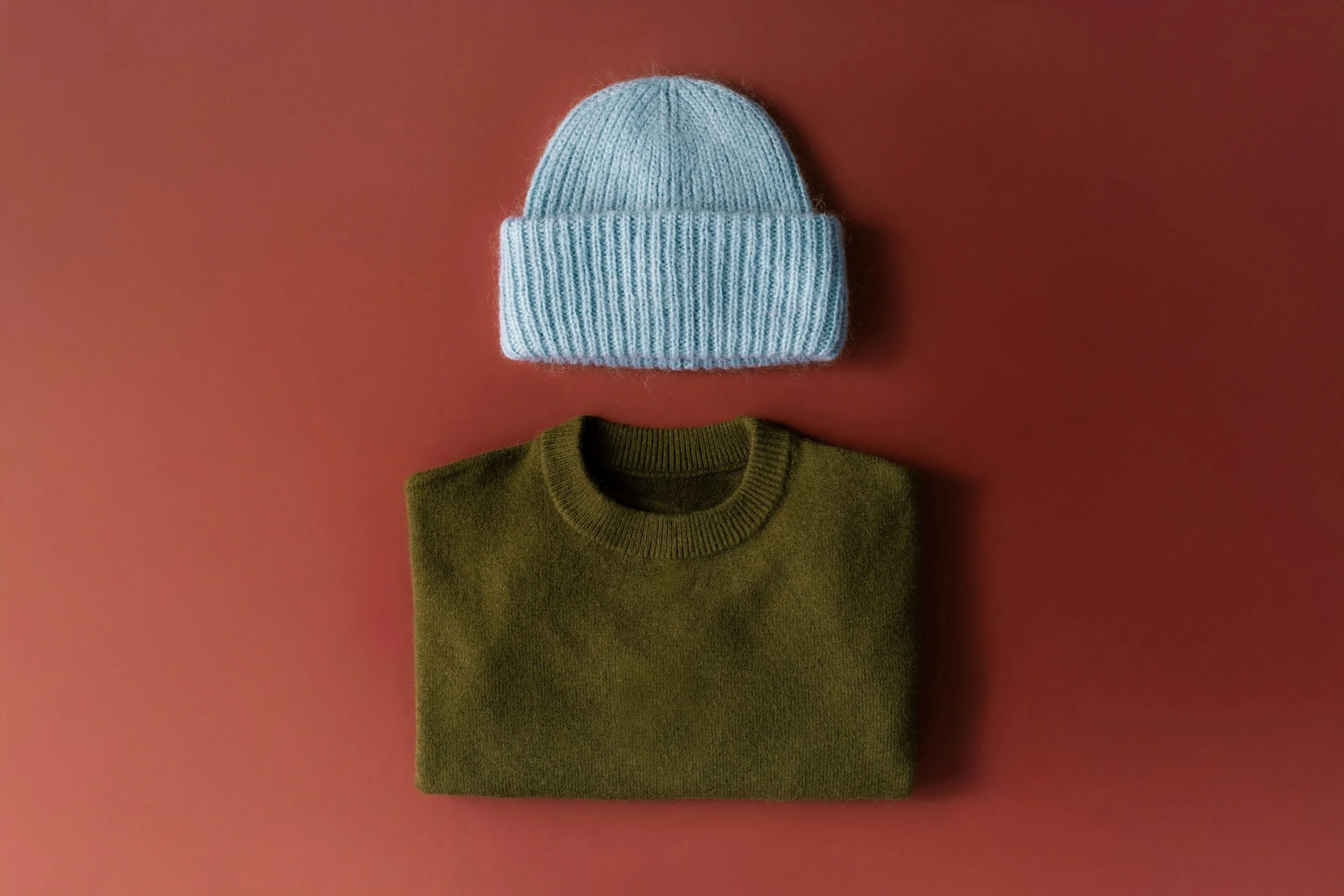
If you've spent any time watching knitting tutorials or sitting in a knitting circle, you've probably noticed something curious: everyone knits differently.
Some people hold their yarn in their right hand. Others in their left. Some knitters' needles move in quick, precise jabs. Others use smooth, flowing motions. Some work looks effortless, while others seem to wrestle with every stitch.
Here's what's fascinating: they're all correct.
There isn't one "right" way to knit. Instead, there are multiple regional styles, each with its own history, logic, and advantages. The style you choose—or the one that chooses you—depends on comfort, speed, ergonomics, and sometimes just what your grandmother taught you.
Let's explore the major knitting styles practiced around the world, so you can understand what you're already doing (and maybe experiment with something new).
The Two Main Families: English vs Continental
Before we dive into regional variations, understand that most knitting styles fall into two broad categories based on one key factor: which hand holds the working yarn.
English Style (Throwing)
How it works:
The working yarn is held in the right hand. To make a stitch, you "throw" the yarn over the right needle with your right hand or fingers.
Common in:
English-speaking countries (UK, US, Canada, Australia), though certainly not exclusive to these regions.
The motion:
Your right hand releases the needle, wraps yarn around it, then grasps the needle again to pull through the stitch. It's a larger, more obvious motion—hence "throwing."
Advantages:
Intuitive for many beginners
Easy transition to purl stitches
Works well for people who learned from English-language tutorials
Very common, so lots of resources available
Considerations:
More hand movement can lead to slower knitting
Repetitive motion might cause hand fatigue for some knitters
Can be harder on wrists during long sessions
Best for:
Beginners following English-language patterns and tutorials, knitters who find the motion comfortable and natural.
Continental Style (Picking)
How it works:
The working yarn is held in the left hand. To make a stitch, the right needle "picks" the yarn off the left needle—the yarn stays tensioned in your left hand throughout.
Common in:
Continental Europe (Germany, Scandinavia, Netherlands, Eastern Europe), Russia.
The motion:
Your left hand maintains constant yarn tension. Your right needle scoops under the yarn to create stitches. Minimal hand movement, maximum efficiency.
Advantages:
Generally faster once mastered
Less hand movement means less fatigue
Efficient for colorwork (holding two colors, one in each hand)
Smooth, ergonomic motion
Considerations:
Steeper learning curve for some
Purling can feel awkward initially
Requires building left-hand tension skills
Less common in English-language tutorials (though growing)
Best for:
Knitters seeking speed and efficiency, those doing lots of colorwork, people with hand pain from English knitting.
Regional Variations and Specialized Styles
Beyond the English/Continental divide, regional traditions have developed unique approaches that solve specific problems or suit local preferences.
Portuguese Style
How it works:
The working yarn is tensioned around the neck or through a pin worn on the left shoulder/chest. The yarn feeds directly to the left needle, and the right hand throws the yarn similar to English style—but without needing to maintain tension in your hand.
Common in:
Portugal, Brazil, parts of Greece, Turkey, and Peru.
What makes it unique:
The tension device (pin or just your neck) holds the yarn, freeing both hands for needle manipulation. Purling becomes especially fast and smooth.
Advantages:
Extremely fast purling (seriously, watch a Portuguese knitter purl—it's mesmerizing)
Reduces hand and wrist strain
Consistent tension without effort
Excellent for ribbing and garter stitch
Great for knitters with arthritis or hand pain
Considerations:
Requires a Portuguese knitting pin or adaptation
Yarn going around neck feels weird initially
Less common, so fewer tutorials available
Pattern reading is the same, but the motion is very different
Best for:
Knitters with hand pain, those who hate purling, anyone looking for an ergonomic alternative.
Russian/Eastern European Style
How it works:
Similar to Continental, but with a crucial difference: stitches sit on the needle with the leading leg on the back of the needle instead of the front. Knitters work through the back loop as standard.
Common in:
Russia, former Soviet countries, some Eastern European regions.
What makes it unique:
The orientation of stitches on the needle is reversed from Western knitting. This affects how you work decreases and some stitch patterns.
Advantages:
Creates a slightly different fabric texture (some prefer it)
Very efficient motion
Can be faster for some knitters
Strong knitting tradition with regional patterns
Considerations:
Western patterns need mental translation
Decreases slant opposite directions
Can cause confusion when following standard patterns
Requires awareness when joining Western knitting groups
Best for:
Knitters raised in this tradition, those interested in regional Eastern European patterns.
Combined/Combination Knitting
How it works:
A hybrid method where knit stitches mount one way on the needle and purl stitches mount the opposite way. Knitters alternate working through the front or back of loops depending on whether they're knitting or purling.
Common in:
Less regional, more individual—some people naturally develop this method.
What makes it unique:
Makes purling easier and faster by changing stitch orientation, but requires awareness of which way stitches are mounted.
Advantages:
Can significantly speed up ribbing
Reduces wrist motion for purling
Some find it more ergonomic
Creates standard fabric despite different technique
Considerations:
Must adjust for certain decreases
Pattern instructions need mental translation
Easy to lose track of stitch orientation
Not widely taught in standard classes
Best for:
Experienced knitters looking to increase speed, those who naturally gravitate toward this method.
Lever/Flicking Knitting (Irish Cottage Style)
How it works:
The right needle is anchored (tucked under your arm, against your body, or held firmly in your hand) and acts as a lever. Your right index finger "flicks" the yarn around the needle tip.
Common in:
Ireland, Scotland, parts of England.
What makes it unique:
The right needle barely moves—all action happens at the tip with minimal hand motion. Extremely fast once mastered.
Advantages:
Can be the fastest knitting style
Minimal hand and arm movement
Very ergonomic for long sessions
Impressive to watch
Great for production knitting
Considerations:
Requires specific needle holding technique
Steep learning curve
Awkward feeling initially
May not work well with all needle types
Best for:
Speed knitters, those doing large projects, knitters with shoulder or arm issues.
Norwegian/Scandinavian Purling
How it works:
A Continental variation specifically for purling where the yarn is held in front and the needle comes up under the yarn (rather than scooping over).
Common in:
Norway, Sweden, other Nordic countries.
What makes it unique:
Makes Continental purling significantly faster and more comfortable—especially important for traditional colorwork patterns that require lots of purling.
Advantages:
Faster Continental purling
More comfortable hand position
Perfect for Nordic colorwork traditions
Reduces wrist strain during ribbing
Considerations:
Different from standard Continental purling tutorials
Requires practice to build tension
May feel counterintuitive at first
Best for:
Continental knitters who struggle with purling, colorwork enthusiasts.
Finding Your Style: A Practical Approach
So which style should you use?
The honest answer: whichever feels best for your hands and serves your knitting goals.
If you're a complete beginner:
Start with English or Continental based on available tutorials and teachers. Most English-language resources teach English style first because it's intuitive. Continental has a steeper learning curve but long-term benefits.Don't stress about choosing "perfectly." You can always change later.
If you're experiencing hand pain:
Experiment with:
Portuguese style (excellent for arthritis)
Lever/flicking (reduces repetitive motion)
Continental (less movement than English)
Ergonomics matter more than tradition. Your hands come first.
If you want to increase speed:
Try:
Continental knitting
Lever/flicking style
Norwegian purling (if you're already Continental)
Speed comes from efficiency of motion. Less movement = more stitches per minute.
If you do lots of colorwork:
Learn Continental or combination knitting—holding different colors in different hands dramatically speeds up stranded colorwork.
Many colorwork knitters use English in their right hand and Continental in their left simultaneously.
If you knit for hours at a time:
Prioritize ergonomics: Portuguese, lever, or Continental styles typically cause less strain during marathon knitting sessions.
Can You Change Styles?
Absolutely. Many experienced knitters use multiple styles depending on the project.
Fair warning: Changing styles feels impossibly awkward at first. Your hands have muscle memory from your current method. Learning a new style temporarily makes you feel like a beginner again—slow, clumsy, uncertain.
This is normal and temporary.
Give yourself at least 10-20 hours of practice with a new style before judging whether it works for you. Your hands need time to build new neural pathways.
How to learn a new style:
Watch videos. Lots of them. Seeing the hand position from multiple angles helps.
Start with something simple. Knit dishcloths or practice swatches—not your complicated sweater.
Practice in short sessions. Your hands will tire quickly at first.
Be patient. You'll be slower temporarily. This is the price of learning.
Notice benefits gradually. Faster speed, less pain, better tension—these emerge over weeks, not days.
The Beauty of Diversity
Here's what's remarkable about knitting: this ancient craft has evolved differently across cultures, climates, and communities. Each regional style emerged to solve specific challenges or suit local preferences.
Portuguese knitters developed their style for speed during long hours of production knitting. Scandinavian methods accommodate complex colorwork patterns. English cottage knitters anchored needles to maximize output.
Every style has logic. Every approach is valid.
And the fact that we can learn from each other—sharing techniques across continents and centuries—is part of what makes the knitting community so rich.
Your style doesn't define you as a knitter. Your willingness to create, learn, and adapt does.
Your Invitation to Explore
You don't need to master every knitting style. You don't even need to try them all.
But understanding that options exist—that if your current method causes pain, feels inefficient, or just doesn't click, there are alternatives—is empowering.
The needles and yarn don't care how you hold them. They only care that you show up, create stitches, and build something beautiful.
So knit the way that serves you best. Learn from traditions around the world. Experiment when curiosity strikes. And remember: the "right" way to knit is the way that keeps you knitting.
One stitch at a time, in whatever style makes your hands happy.